- Easter Delivery Times

Please note our offices and warehouses will be closed on Good Friday and Easter Monday. Orders placed before 4:30pm on 2nd April 2026 will be processed as normal, however we are unable to guarantee delivery next day as our external couriers operate on a working day service. Orders placed after 4:30pm or during the Easter period will be processed on 7th April 2026.

Home Medical Consumables EpiPens & Anaphylaxis Kits for Schools

EpiPens & Anaphylaxis Kits for Schools

The Human Medicines Regulations 2017 has allowed primary and secondary schools to buy adrenaline auto-injector (AAI) devices without a prescription, for emergency use. Since 2017 we have been trusted to supply thousands of UK Schools with EpiPens and Jext branded Adrenaline Injectors, along with anaphylaxis kits, online anaphylaxis training and accessories for correct storage, signposting, logging, maintenance and disposal to meet relevant Department of Health guidance at an affordable cost.

Guidance has recently been strengthened to make spare adrenaline devices, allergy awareness training, and allergy safety policies and procedures mandatory for UK schools. Originally known as ‘Benedicts Law’ following the tragic death of Benedict Blythe due to an avoidable allergic reaction at school, this guidance is likely to be written into law to help schools better address the need for robust allergy management and emergency response.

Promotion-3
Eureka Anaphylaxis Kit with School Starter Pack

Anaphylaxis kits and tools to help schools store and access AAIs safely, clearly, and compliantly

£2.07
Promotion-3
Eureka Anaphylaxis Kits

Emergency AAI kits with EpiPen or Jext, designed to help schools store and access injectors quickly and safely

£2.07
JEXT Adrenaline Injectors

JEXT branded AAIs in 150mcg and 300mcg doses

£99.99
EpiPen Adrenaline Injectors

Epipen branded AAIs in 150mcg and 300mcg doses

£99.99
Anaphylaxis School Starter Packs without AAIs

Starter packs will allow your school to implement an emergency AAI protocol

£61.50
Promotion-3
Anaphylaxis Storage Boxes, Points & Cabinets

Safe and central storage points and cabinets for your essential Adrenaline Auto Injectors (AAI) and anaphylaxis supplies

£6.60
Promotion-3
Anaphylaxis School Starter Packs with AAIs

Essential kits for safely storing AAIs, providing guidance for effective anaphylaxis emergency responses in schools

£2.07
Anaphylaxis Signs
Anaphylaxis Signs
£2.07
Promotion-3
Anaphylaxis Awareness Level 2 (VTQ)

Learn how to recognise and respond to anaphylaxis

£9.95
Promotion-3
Adrenaline Auto-Injector Carry Cases

Keep your AAIs protected, organised and easy to access with these durable carry cases, ideal for schools, workplaces and everyday use

£6.60
Promotion-3
Anaphylaxis Safety Information & Accessories

Provide clear anaphylaxis safety information and essential accessories to support awareness, compliance and rapid emergency response

£2.07
Inhalers For Schools

Schools are advised to keep spare inhalers on site to provide quick and effective asthma relief

£2.07

Support Allergy Emergencies with Accessible, On-Site AAI Kits

EpiPens and Anaphylaxis Kits In Schools

The Human Medicines Regulations 2017 has allowed primary and secondary schools to buy adrenaline auto-injector (AAI) devices without a prescription, for emergency use. Spare adrenaline devices, properly stored are proposed to be a mandatory requirement in UK Schools due to the stark risks posed by allergies, alongside other measures such as allergy training and policies.

Since 2017 we have been trusted to supply thousands of UK Schools with EpiPens and Jext branded Adrenaline Injectors, along with kits and accessories for the correct storage, signposting, logging, maintenance, disposal and usage information, expressly to meet relevant Department of Health guidance, which has recently been proposed to be made statutory and written in to law. 

We supply EpiPens and other adrenaline injectors in innovative and sustainable temperature controlled packaging to ensure there is minimal delay in receiving emergency pharmaceuticals, with most orders received next working day to help schools meet this requirement at an affordable cost.

The number of pupils with allergies or prescribed different types of AAI can vary each year. Our straightforward service facilitates schools to easily order how many pens they need, when they need them, at the same time as other essential supplies. Our products are expressly designed to help schools meet the specifics of official guidance.


Please note that AAIs are manufactured with a short use by date due to the nature of the adrenaline within. If you wish to clarify the use by dates of our existing stock before placing your order, please contact our sales department on 0800 358 0085.

Orders for EpiPens and Anaphylaxis Kits must be signed by the Headteacher or Principal. We have made the process as easy as possible to ensure there is no barrier to ordering, and no delay in receiving your supplies.

Fill out our simply AAI supply form either online or download it and scan/email it sales@eurekadirect.co.uk – alternatively phone us on 0800 358 0085 to place your order. Remember, we offer UK schools instant credit


Image Full

Why Your School Should Provide Anaphylaxis and Asthma Kits

Anaphylaxis is a serious allergic reaction that can be life-threatening and requires immediate treatment, with 26,000 hospital admissions every year. For any public premises with a duty of care, the risks are stark:

  • Some studies estimate that 40-50% of allergy sufferers do not carry their prescribed EpiPen or Adrenaline Injector device on them regularly.
  • Up to 20% of anaphylaxis cases are triggered by a previously unknown cause
  • Someone can eat a food or take a medication safely for years before suddenly developing a severe allergy
  • The prevalence of severe allergies has roughly doubled in the last 20 years

Allergic asthma is also a common occurrence, where breathing difficulties (wheezing, coughing, shortness of breath) are triggered by inhaling allergens. It causes the airways to swell and tighten when exposed to these substances. Up to 80% of people with asthma have this type – some may not have their own inhaler to hand when they experience it.

For many settings, despite stark and clear risks for UK schools, allergy management has relied on best practice guidance rather than legal obligation. 

Originally known as ‘Benedict's Law’ following the tragic death of Benedict Blythe due to an avoidable allergic reaction at school, new statutory guidance will mandate actions to help schools better address the need for robust allergy management, awareness and emergency response for anaphylaxis and allergic asthma.


Save Time, Lives & Money With Eureka!

Buying emergency devices as and when required is a great way to keep costs down whilst ensuring your school still has adequate lifesaving provisions should an emergency occur.

The number of pupils at risk of anaphylaxis or allergic asthma can vary significantly across schools, and change each year. As such, so does the ‘right’ number of backup or emergency devices that may be needed at any one time.

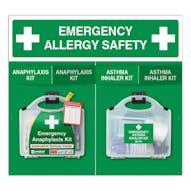
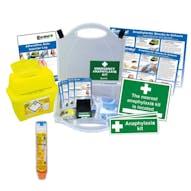
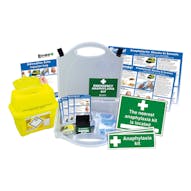
Our anaphylaxis kits provide space for up to 4 emergency adrenaline injectors, so you can stock them appropriately for your school as per guidance. For total flexibility, we also sell the empty kit boxes and wall points separately, so you can easily add existing emergency EpiPen or JEXT devices to the correct dosage slot and benefit from having clearly marked and accessible anaphylaxis kits on your premises, all at an affordable cost.

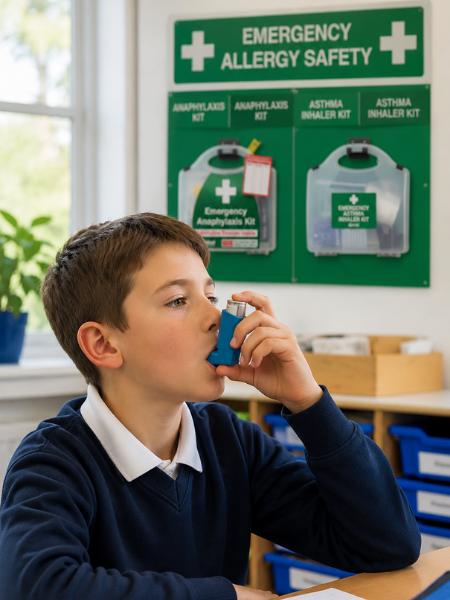
We also provide a range of Asthma kits with spare inhaler devices, ideal for storing with or near the anaphylaxis kits for a comprehensive emergency response to severe allergic reactions, as per the latest guidance.

Alternatively, you may simply wish to purchase and hold the emergency devices only in an appropriate place.

Our low prices and fast, free delivery help every school remain agile with the amount of devices they hold, meeting essential obligations without overspending. For this reason, many schools choose to manage their emergency stocks by buying in this way – we’ve supplied over 10,000 UK schools with emergency medical supplies.

Severe Allergy Risks In UK Schools

Image Full

Schools already have a legal duty under the Children and Families Act 2014 to support pupils with medical conditions, such as severe allergies. Schools can also refer to existing DfE guidance to create clear policies with trained staff and adequate emergency planning, including spare AAI devices.

However, for several years, there have been concerns from pupils, parents, staff, clinicians and sadly coroners that allergy safety and awareness in schools was not consistent.

Benedict Blythe’s tragic death following an allergic reaction to diary milk was attributed to a number of causes including a lack of allergy awareness, absent allergy management processes, and no emergency response provisions available within his school. The campaign that followed became ‘Benedict’s Law’ - mandating a straightforward set of basic safeguards including spare adrenaline devices in every UK school, proper allergy training for staff, and clear whole-school policies for emergency response.

The recommendations from Benedicts law have now been issued as draft statutory guidance, with the expectation that they will be written into law soon. Previously, only around half of schools have had allergy safety measures in place.

The risks for UK Schools are alarming:

  • 680,000 children in England live with allergies. On average, that’s around 2 per class
  • 1 in 4 first time anaphylaxis attacks occur in schools
  • 1 in 5 fatal food-anaphylaxis cases occur in schools
  • 50% of children are now affected by at least one allergic condition
  • Approximately 43,000 cases of childhood allergies require care every year

Hospital admissions for allergic reactions have risen by 160% in the past 20 years, and studies show that the incidence of food allergies in England nearly doubled between 2008 and 2018.

The prevalence of allergies in schools, when studies suggest up to 50% of those with known severe allergies do not have a prescribed device on them at any given time, means relying solely on children carrying pre-prepared medication is dangerous.

Image Onclick
Click View Full Image
Image Onclick
Click View Full Image

Brands of Adrenaline Injector

The Department of Health state:

"Schools are advised to hold an appropriate quantity of a single brand of AAI device to avoid confusion in administration and training. Where all pupils are prescribed the same device, the school should obtain the same brand for the spare AAI. If two or more brands are currently held by the school, the school may wish to purchase the brand most commonly prescribed to its pupils"

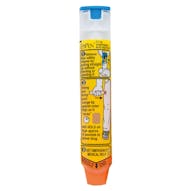
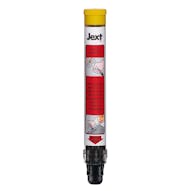
EpiPens are currently the most dominant brand of AAI in the UK (hence why many people know AAI's as 'EpiPens'), however we also offer Jext devices to enable schools to make an appropriate brand choice for their school.

Eureka Anaphylaxis Kits accommodate both EpiPen and JEXT devices to provide a flexible solution for the most suitable brand in your school.

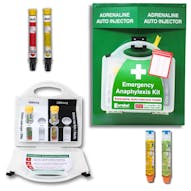
EpiPen AAI on the left and Jext AAI on the right

Storage For EpiPens and Adrenaline Injectors

Our range of points, boxes and signage make it easy to store AAIs in a compliant way in line with the Department of Health guidance. It is important to ensure that AAIs are not 'locked' away.

"Schools should ensure that all AAI devices – including those belonging to a younger child, and any spare AAI in the Emergency kit – are kept in a safe and suitably central location: for example, the school office or staffroom to which all staff have access at all times, but in which the AAI is out of the reach and sight of children. They must not be locked away in a cupboard or an office where access is restricted. Schools should ensure that AAIs are accessible and available for use at all times, and not located more than 5 minutes away from where they may be needed. In larger schools, it may be prudent to locate a kit near the central dining area and another near the playground; more than one kit may be needed."

We also supply our anaphylaxis kits with simple but effective tamper tags which dissuade from misuse and prevent accidental opening, but allow for emergency access to devices in seconds when needed.

Signposting Adrenaline Injectors and Anaphylaxis Kits

As with all first aid and emergency medical supplies, Adrenaline Injectors should be properly signposted with compliant and universally recognised signage.

Signage for first aid and medical supplies is classed as ‘safe condition’ signage, and should be green with white text and a first aid cross to be compliant with ISO standards and Health and Safety (Signs and Signals) Regulations 1996.

This is important to ensure that emergency Anaphylaxis provisions are signposted consistently with other signage that will already exist on your premises.

The HSE state: “Where signs of the same type are used in a workplace, they should be of a consistent style and design to ensure they are easily and quickly understood.”

  • Consistency of design is important to avoid confusion and ensure messages are clearly understood.
  • Signs should conform to the standardised designs laid out in the Signs and Signals regulations, particularly regarding colour, shape, and symbols.
  • Using different styles of signs to convey the same type of message (e.g., multiple types of safe condition or emergency signs) is not recommended because:
    • It can dilute recognition.
    • It may cause hesitation or misinterpretation in emergencies.
    • It can reduce overall effectiveness and compliance.
Two AAI signs, one portrait and one landscape. Two AAI stations one with the AAI Kit Attached and one showing the backboard.

Achieving Good Schools Practice with Eureka

We have developed accessories and kits to expressly meet Department of Health guidance. Firstly with our range of anaphylaxis kits and also with our companion range of inhaler kits, to be stored alongside anaphylaxis kits for the treatment of allergic asthma – another common allergic reaction experienced from airborne allergens, and a common condition among those with known severe allergies.

Both anaphylaxis and allergic asthma are referenced in new statutory guidance regarding allergy management for schools, expected to be written in to law – as such, comprehensive allergy management and emergency response procedures should cover anaphylaxis and also consider allergic asthma. 

We make both types of kit easily available, with flexible and affordable options, to help your school meet these important obligations for less.

The Department of Health state:

"It is good practice for schools holding spare AAIs to store these as part of an emergency anaphylaxis kit which should include: 

  • 1 or more AAI(s)
  • Instructions on how to use the device(s) 
  • Instructions on storage of the AAI device(s) 
  • Manufacturer’s information 
  • A checklist of injectors, identified by their batch number and expiry date with monthly checks recorded 
  • A note of the arrangements for replacing the injectors 
  • A list of pupils to whom the AAI can be administered 
  • An administration record

Schools might like to keep the emergency kit together with an "emergency asthma inhaler kit" (containing an inhaler device and spacer). Many food-allergic children also have asthma, and asthma is a common symptom during food-induced anaphylaxis."

– Department of Health: Guidance on the use of adrenaline auto-injectors in schools

The number of pupils with allergies or prescribed different types of AAI can vary each year, so it's important to remain dynamic with your schools' plans to ensure they’re appropriate.

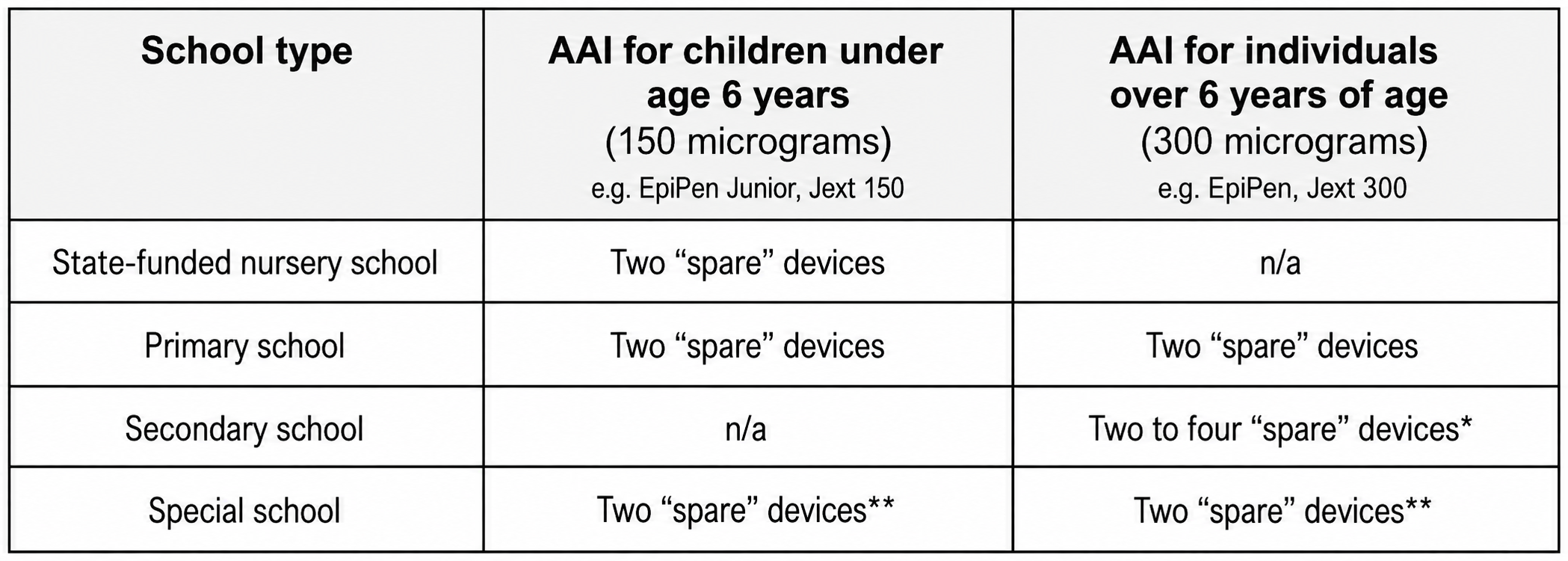
Schools should generally obtain up to 4 “spare” AAIs in appropriate dosages. They should be stored in pairs, and it may be necessary that pairs of devices are held in separate locations as needed to ensure access within 5 minutes. Where schools operate across more than one site, there should pairs of the appropriate dosage available on each site as required. Our various kit options make it easy for you to configure you schools solution to meet this guidance at an efficient cost. You can even choose the brand of AAI which staff and pupils are most familiar with, and easily adapt solutions over time.

Image Full

Important information about allergic reactions

However effective a measures to reduce exposure to allergens may be, a risk remains that an individual will suffer an allergic reaction. It is therefore essential that the allergy safety policy provides robust and effective measures for emergency response.  
Allergic reactions occur when a susceptible person is exposed to something (an “allergen”) they are allergic to. Most allergic reactions do not affect the Airway/Breathing/ Circulation (“ABC”) and can be treated with an oral antihistamine. 
Allergic reactions are unpredictable. Most reactions do not result in anaphylaxis. However, when anaphylaxis occurs, reactions usually start off as less severe (e.g. skin rash, vomiting) but then become anaphylaxis – so someone having a reaction should always be monitored (e.g. in a first aid room) for at least 60 minutes afterwards, just in case the reaction gets worse. In other people, anaphylaxis develops within minutes after exposure to the allergen. 


Features of an allergic reaction and anaphylaxis:

Mild-moderate reaction (not anaphylaxis) 

  • Swollen lips, face or eyes 
  • Itchy or tingling mouth 
  • Mild throat tightness 
  • Hives or itchy skin rash  
  • Abdominal pain or vomiting 
  • Sudden change in behaviour

Signs of anaphylaxis (think ‘A B C’)

A: Airways: Swelling in the throat, tongue or upper airways (tightening in the throat, hoarse voice, difficulty swallowing)

B: Breathing: Sudden onset wheezing, breathing difficulty, noisy breathing 

C: Circulation: Dizziness, feeling faint, sudden sleepiness, tiredness, confusion, pale clammy skin, loss of consciousness

Anaphylaxis is a severe and life-threatening allergic reaction - it can be fatal if treatment is not given quickly.

Mild reactions can worsen and become anaphylaxis. Always stay with someone having an allergic reaction for at least one hour. If in doubt, always treat for anaphylaxis. Treatment of anaphylaxis is with a dose of adrenaline.

Once started, anaphylaxis reactions progress quickly. Investigations into fatal anaphylaxis show that there is only a 20-30 minute window of opportunity during which steps can be taken to prevent death – therefore giving emergency adrenaline immediately and calling Emergency Services (999) is so important. Anaphylaxis always requires an emergency response. Anaphylaxis can occur without any other signs (such as a skin rash) being present. Always consider anaphylaxis in someone with a known food allergy who has sudden difficulty in breathing.


Image Full

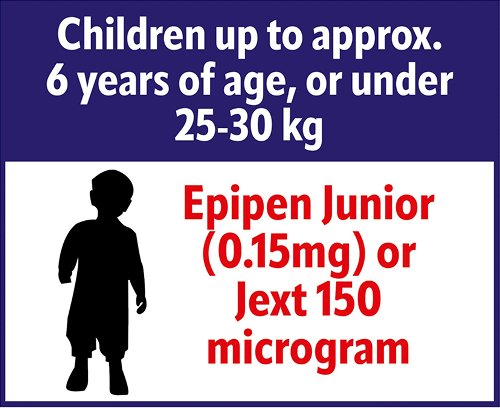
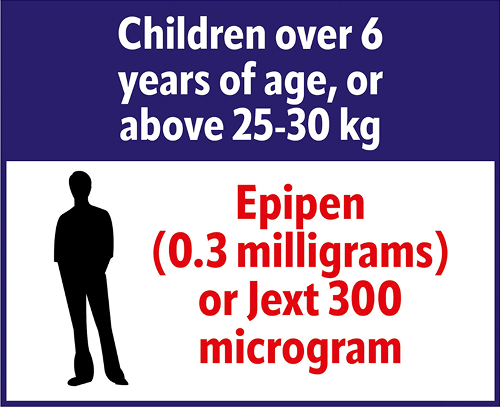
Adrenaline devices are available in different dosages depending on body weight/age. AAls are highly intuitive and easy to use devices used for the emergency treatment of anaphylaxis.

Image Full
Image Full
Image Full
Eureka Anaphylaxis kits feature clearly marked slots for 150mcg and 300mcg dosages to exactly match this categorisation and allow for correct storage of both junior and adult devices in one kit. Ensure that devices are stored in the correct slot that match their dosage when adding devices and performing regular maintenance inspections.

"In the context of supplying schools with AAIs for use in an emergency setting, using these same age-based criteria avoids the need for multiple devices/ doses, thus reducing the potential for confusion in an emergency. Schools should consider the ages of their pupils at risk of anaphylaxis, when deciding which doses to obtain as the spare AAI." – Department of Health: Guidance on the use of adrenaline auto-injectors in schools

Asthma is an additional reaction which may require treatment with a personal or emergency inhaler as a result of an allergic reaction, and is common among those with known severe allergies. Tragically, over a recent 4 year period, the National Child Mortality Database Report on Asthma and Anaphylaxis notes that all of the children who sadly died from anaphylaxis and had known allergies, were also diagnosed with asthma.


Since 1st October 2017, the Human Medicines (Amendment) Regulations 2017 have allowed primary and secondary schools to buy adrenaline auto-injector (AAl) devices without a prescription, upon receipt of a signed order form from the head teacher.

Anaphylaxis tends to occur straight after coming into contact with a trigger, however it can occur a few hours later. Different people have different triggers.
Common triggers include:

Food

Peanuts, eggs, seafood

Medicines

Penicillin

Insects

Bee or wasp stings


AAls are highly intuitive and easy to use devices used for the emergency treatment of anaphylaxis.

Different brands of AAls are used in different ways. You MUST follow the instructions provided with your auto-injector.

Image Full

"In the context of supplying schools with AAIs for use in an emergency setting, using these same age-based criteria avoids the need for multiple devices/ doses, thus reducing the potential for confusion in an emergency. Schools should consider the ages of their pupils at risk of anaphylaxis, when deciding which doses to obtain as the spare AAI." – Department of Health: Guidance on the use of adrenaline auto-injectors in schools

NEW! Pharmaceutical Packaging

Image Full

No more delays to despatching pharmaceutical items

As part of our licence to distribute pharmaceutical products, we must ensure that pharmaceuticals are not stored in temperatures below 8° or above 25° at any time, including when in transit. We store pharmaceuticals in a specialist temperature-controlled room, but are unable to guarantee temperatures once goods have been despatched. This can cause delays to despatching orders in the winter, when overnight temperatures are often sub-zero, or on hot days in the summer. This is far from ideal given the essential nature of products like back up Adrenaline Injectors and Inhalers for schools.

Temperature controlled packaging is often very expensive and would typically result in significant costs to be passed on. However, as part of our commitment to serve our customers as best as we can, we have found a new innovative solution which enables us to promptly despatch pharmaceutical orders in almost any external conditions AND does not cost our customers a penny more!

Our new packaging for pharmaceutical products is as sustainable as it is effective. It is made using a combination of 100% pure natural sheep wool fibres, and a compostable and biodegradable outer. The packaging ensures that pharmaceuticals are insulated when external temperatures are cold and chilled when the weather is warm, all the way from our warehouse until being delivered to your door.

Please note that AAI devices are shipped separately to other elements which are not pharmaceutical, such as the boxes and wall mounted points. We do not charge for this; all delivery is fast and FREE!

Anaphylaxis Awareness Training

Under new proposed statutory guidance, it will be mandatory for schools to train staff in allergy awareness and emergency response procedures.

Ensuring staff are trained in allergy awareness and the use of Adrenaline Auto-Injectors (AAIs) not only better prepares your school for managing the stark risks posed by allergies, but also helps your school to get ahead of when the guidance is written into law as expected.

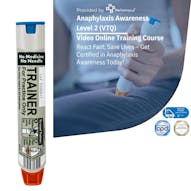
We’ve partnered with a market leading provider of fully accredited and CPD certified training to offer our customers instant access to online Anaphylaxis Awareness training courses for under £10 per user, so you have the flexibility to train staff whenever needed, at an affordable cost. 

This five-star rated course is valid for 3 years and issues all those who complete it with an official certificate for storing as part of your organisations records.  

The course material and resulting qualifications are endorsed by TQUK, and fully meet the latest UK and European Resuscitation Council Guidelines including the guidelines for Anaphylaxis

This course is aimed at anyone who requires a course in anaphylaxis awareness. The course covers the use of EpiPens and Jext as well as recognition of signs, treatment, concerns and activating the EMS as well as care for the patient. 

Why Buy School EpiPens & Anaphylaxis Kits From Eureka?

Image Full

Order exactly what your school needs, when you need it, along with other essential school supplies. The number of pupils with allergies or prescribed different types of AAI can vary each year, so it’s important to remain dynamic with your schools’ plans

Image Full

Choose from leading brands to suit your schools requirement

Image Full

Instant Credit for all UK Schools

Image Full

Free gift with all orders over £150

Image Full

Innovative and sustainable temperature controlled packaging enables most orders to be delivered next working day

Image Full

Products expressly created to meet official guidance

Image Full

Rated 'Excellent' on Trustpilot from thousands of reviews. 95% of our reviews are 4 stars or better

Image Full

Supplier to over 10,000 UK Schools with 26 years’ experience

Without proper policies and safeguards, allergies exclude some students from taking part in school activities. The latest guidance changes this.

Arrangements must now be clear and unambiguous about the need for proactive support so that children and young people with medical conditions can participate in school trips and visits, or in sporting and extracurricular activities, and not prevent them from doing so. Schools, colleges and early years settings should consider what arrangements they need to make to enable children with medical conditions to participate fully and safely on trips and visits. A risk assessment should be carried out so that planning arrangements take account of any reasonable adjustments needed to ensure that children and young people with medical conditions are included, including allergies.

Such plans should include how individuals at risk of anaphylaxis will have access to their prescribed adrenaline devices, alongside “spare” adrenaline devices; and how children and young people with allergy will be able to participate safely in visits, trips and extra-curricular activities.

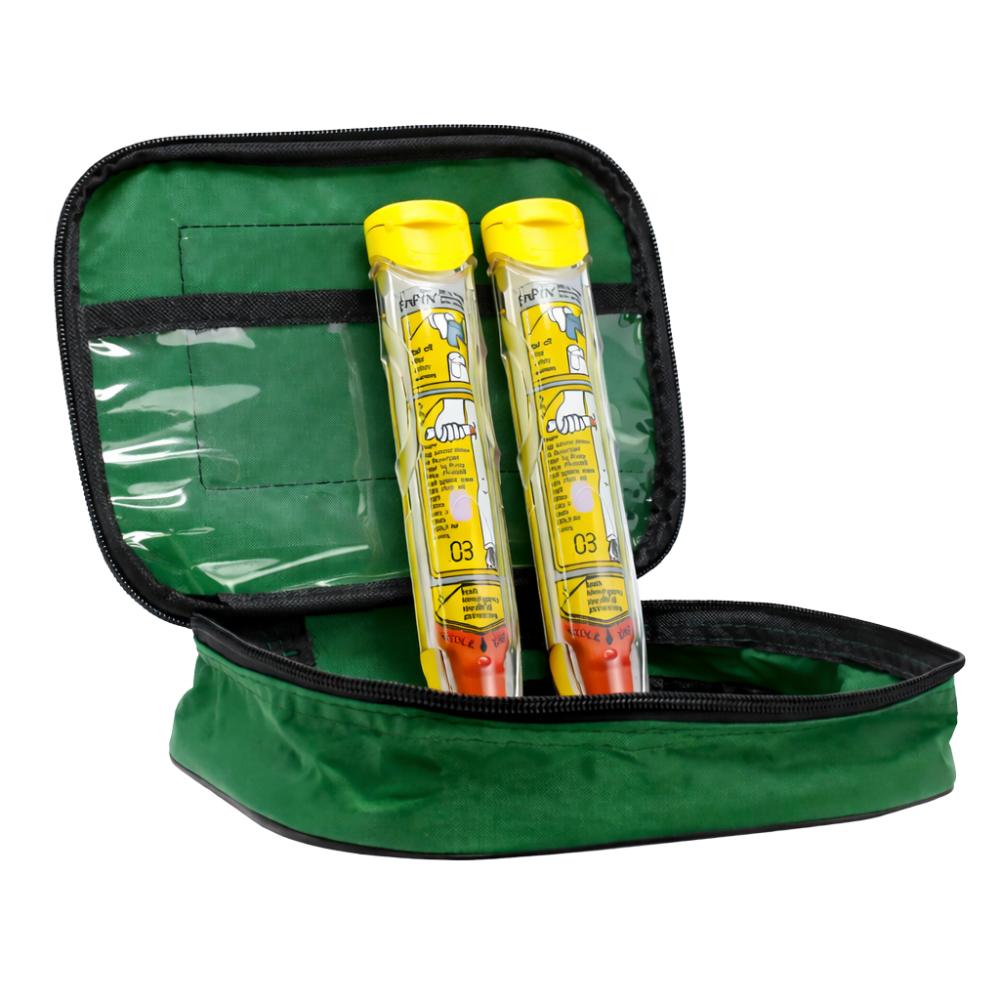
Our range of anaphylaxis kit soft pouches are a simple and cost-effective solution for ensuring that prescribed or emergency/spare devices can be readily available on school visits/trips, or activities away from the main school building, and clearly identifiable at all times as part of such arrangements.

Reviews

Don’t just take our word for it – here are just some of things our customers say after buying from us:

Image Full

Thank you for making the ordering process as simple as possible

Great prices, fast delivery, pleasure to do business with

Exceptional Service – Highly Recommend to Schools