- Notice regarding AAIs and Inhalers to Schools:

As schools return and make allergy safety arrangements for Benedict’s Law compliance, demand is high. New orders for AAIs and Inhalers placed after 1st September may be subject to a 10-14 working day lead time. Due to extreme demand and shortages in supply, we have temporarily paused products containing 300mcg EpiPen devices. The good news is that we continue to have strong availability of Jext AAIs which are directly comparable and equally suitable for schools. Thank you for your patience and understanding.

Home Medical Consumables EpiPens & Anaphylaxis Kits for Schools Eureka Anaphylaxis Kit with School Starter Pack

Eureka Anaphylaxis Kit with School Starter Pack

Up to 50% of allergy sufferers do not regularly carry their prescribed adrenaline auto-injectors (AAIs). Schools play a critical role in ensuring backup AAIs are accessible, clearly signposted, and ready for immediate use in emergencies.

The Department of Health's guidance states that 'AAIs must be kept in a safe and suitably central location accessible to all staff at all times but out of the reach of children. They must not be locked away in a restricted cupboard or office and should be located no more than five minutes away from where they may be needed.’

Our Eureka Anaphylaxis Kits with School Starter Packs are designed to help schools meet these responsibilities confidently and cost-effectively. Each kit offers a complete solution for storing, identifying, and quickly accessing AAIs during emergencies.

These school allergy kits include clearly labelled AAI storage units, signage, portable emergency pouches, and supporting documentation - everything needed to improve visibility, support staff training, and ensure a safe, compliant anaphylaxis response.

Choose the anaphylaxis kit that best suits your school’s size and pupil needs. Whether preparing for a new academic year or updating your current allergy response provision, these kits offer practical, budget-conscious solutions for effective allergy management in schools.

Please note that we cannot accept returns on pharmaceutical products.

Support Allergy Emergencies with Accessible, On-Site AAI Kits

EpiPens and Anaphylaxis Kits In Schools

Spare adrenaline devices, correctly stored and centrally accessible, are now expected as part of school allergy policies, which are now a mandatory requirement for schools in England under Benedict’s Law. 

Following the tragic death of Benedict Blythe due to an avoidable allergic reaction at school, this new statutory guidance will better address the need for robust allergy awareness, management and emergency response, and will save lives

Since 2017 we have been trusted to supply thousands of UK Schools with EpiPens and Jext branded Adrenaline Injectors (AAIs), along with kits and accessories for the correct storage, signposting, logging, maintenance, disposal and usage information, expressly to meet relevant guidance.

We supply adrenaline injectors in innovative and sustainable temperature controlled packaging to ensure there is minimal delay in receiving emergency pharmaceuticals.

The number of pupils with allergies or prescribed different types of AAI can vary each year. Our straightforward service facilitates schools to easily order how many pens they need, when they need them, at the same time as other essential supplies. 


Our products are expressly designed to help schools meet the specifics of official guidance. Don’t overpay for devices your school may not need, and don’t overcommit as policies, regulations, devices and requirements evolve.

Please note that AAIs are manufactured with a short use by date due to the nature of the adrenaline within. If you wish to clarify the use by dates of our existing stock before placing your order, please contact our sales department on 0800 358 0085.

Orders for AAIs and Anaphylaxis Kits must be signed by the Headteacher or Principal. We have made the process as easy as possible to ensure there is no barrier to ordering, and no delay in receiving your supplies.

Fill out our simply AAI supply form either online or download it and scan/email it sales@eurekadirect.co.uk – alternatively phone us on 0800 358 0085 to place your order. Remember, we offer UK schools instant credit


Image Full

Why Your School Should Provide Anaphylaxis and Asthma Kits

Anaphylaxis is a serious allergic reaction that can be life-threatening and requires immediate treatment, with 26,000 hospital admissions every year. For any public premises with a duty of care, the risks are stark:

  • Some studies estimate that 40-50% of allergy sufferers do not carry their prescribed EpiPen or Adrenaline Injector device on them regularly
  • Up to 20% of anaphylaxis cases are triggered by a previously unknown cause
  • Someone can eat a food or take a medication safely for years before suddenly developing a severe allergy
  • The prevalence of severe allergies has roughly doubled in the last 20 years

Allergic asthma is also a common occurrence, where breathing difficulties (wheezing, coughing, shortness of breath) are triggered by inhaling allergens. It causes the airways to swell and tighten when exposed to these substances. Up to 80% of people with asthma have this type – some may not have their own inhaler to hand when they experience it. Allergic asthma is strongly linked to severe allergies and anaphylaxis.

For many settings, despite stark and clear risks for UK schools, allergy management has relied on best practice guidance rather than legal obligation. 

Known as ‘Benedict's Law’ following the tragic death of Benedict Blythe due to an avoidable allergic reaction at school, this new statutory guidance will better address the need for robust allergy awareness, management and emergency response for anaphylaxis and allergic asthma.

Save Time, Lives & Money With Eureka!

Buying emergency devices as and when required is a great way to keep costs down whilst ensuring your school still has adequate lifesaving provisions should an emergency occur.

The number of pupils at risk of anaphylaxis or allergic asthma can vary significantly across schools, and change each year. As such, so does the ‘right’ number of backup or emergency devices that may be needed at any one time.

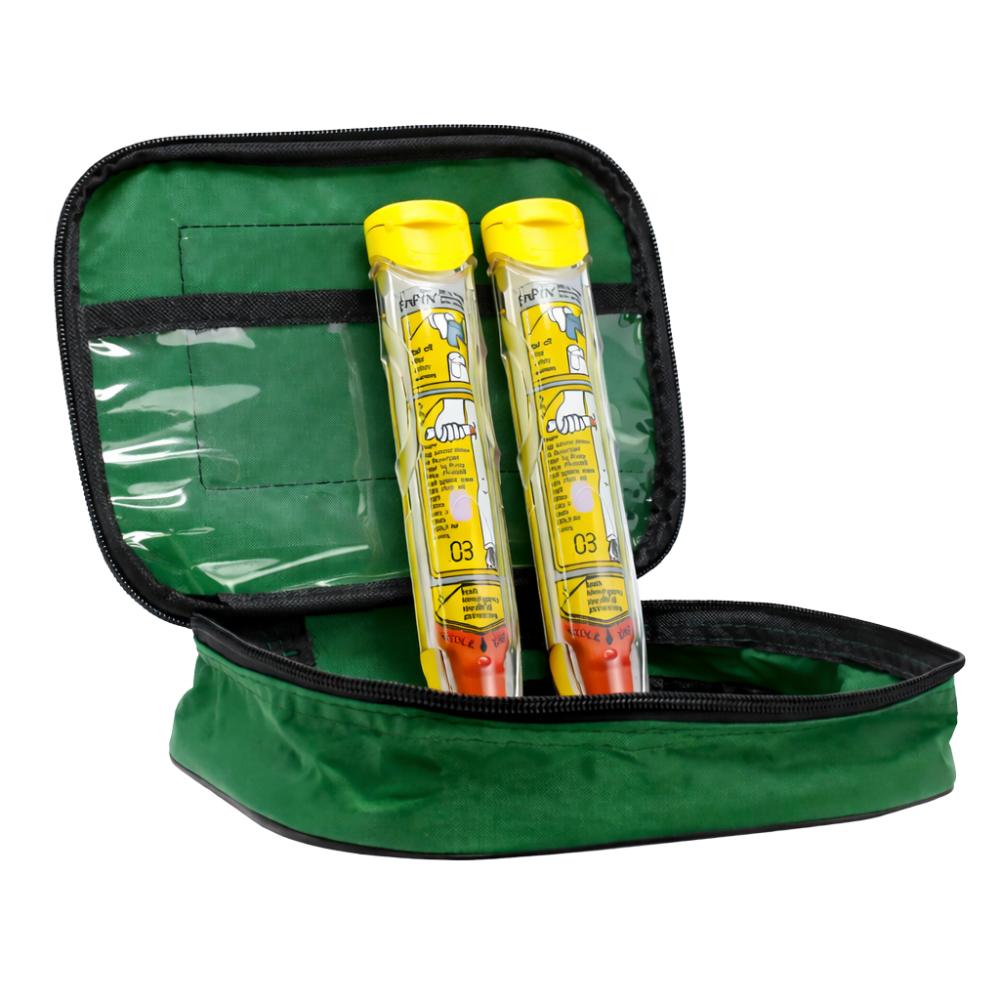
Our anaphylaxis kits provide space for up to 4 emergency adrenaline injectors, so you can stock them appropriately for your school as per guidance. For total flexibility, we also sell the empty kit boxes and wall points separately, so you can easily add existing emergency EpiPen or Jext devices to the correct dosage slot and benefit from having clearly marked and accessible anaphylaxis kits on your premises, all at an affordable cost. (Do not mix ‘spare’ devices for emergency use and ‘spare’ devices prescribed to an individual).

We also provide a range of Asthma kits with spare inhaler devices, ideal for storing with or near the anaphylaxis kits for a comprehensive emergency response to severe allergic reactions, as per the latest guidance.

Alternatively, you may simply wish to purchase and hold the emergency devices only in an appropriate place.


Our low prices and fast, free delivery help every school remain agile with the amount of devices they hold, meeting essential obligations without overspending. Flexible and easy purchasing options allow you to adapt as regulations, products and requirements evolve. For this reason, many schools choose to manage their emergency stocks by buying in this way – we’ve supplied over 15,000 UK schools with emergency medical supplies.

Severe Allergy Risks In UK Schools

Image Full

Schools already have a legal duty under the Children and Families Act 2014 to support pupils with medical conditions, including severe allergies, alongside DfH guidance on AAI policies, staff training and emergency planning. However, concerns persisted that allergy safety and awareness were inconsistent across schools. 

Following the tragic death of Benedict Blythe after an allergic reaction to dairy milk, a campaign for stronger safeguards became known as ‘Benedict’s Law’, calling the urgent need for better allergy awareness, management, and emergency response in educational settings.

Benedict’s Law is now in force, with statutory guidance setting out stronger allergy safety requirements for schools, including allergy policies, staff training and access to spare AAIs. 

The risks for UK Schools are alarming:

  • 680,000 children in England live with allergies. On average, that’s around 2 per class
  • 1 in 4 first time anaphylaxis attacks occur in schools
  • 1 in 5 fatal food-anaphylaxis cases occur in schools
  • 50% of children are now affected by at least one allergic condition
  • Approximately 43,000 cases of childhood allergies require care every year

Hospital admissions for allergic reactions have risen by 160% in the past 20 years, and studies show that the incidence of food allergies in England nearly doubled between 2008 and 2018.

The prevalence of allergies in schools, when studies suggest up to 50% of those with known severe allergies do not have a prescribed device on them at any given time, means relying solely on children carrying pre-prepared medication is dangerous.

New! Eureka Anaphylaxis Kits -  As Low As £249.95!

The latest design of our Anaphylaxis kits stores up to 4 anaphylaxis pens for instant access in an emergency, at an affordable cost, with flexibility on replenishment so you can adapt to changes in requirements without overpaying or over-committing.

Image Full

Key Benefits of Eureka Anaphylaxis Kits include:

  • Lifesaving emergency devices for less – meet the duty of care on your premises with less impact on your budget.
  • Choose from kits with EpiPen or Jext devices, depending on the brand those on your premises are likely to be most familiar with, as per guidance.
  • Choose from 2 or 4 pen kits to suit your premises and budget, with the flexibility to reduce or add to your kits as you see fit. You can also buy the empty box and add your existing supplies to it to minimise outlay cost.
  • A flexible solution – individual devices are readily available separately at a low cost. Replace, add or remove devices when you need to, with typical expiry dates of 9-18 months.
  • Anaphylaxis kits are available with or without wall mounted points to help minimise unnecessary cost, or for use with your own storage options.
  • Compliant labelling and signage designs meet ISO Standards and Health and Safety (Signs and Signals) Regulations for universal recognition.
  • Easy installation, maintenance and checks with everything supplied for simple regular inspections.
  • Supplied with additional FREE signage so your anaphylaxis kits can be quickly located when time is of the essence.
  • Free and Fast Delivery – AAI devices are despatched separately in their own temperature controlled packaging.
  • Buy from a trusted supplier established for over 25 years – we’ve supplied thousands of schools and UK organisations with emergency EpiPen and Jext devices – with 96% of our reviews 4 stars or better!

Already have enough back up devices? You can also buy empty Anaphylaxis Kits for only £59.95 - so you easily add existing EpiPen and Jext devices for emergency access. Combine this with the empty Anaphylaxis Kit Point from as low as £19.95 for a complete setup using AAIs you already have on site.

Image Onclick
Click View Full Image
Image Onclick
Click View Full Image

What Does Benedict's Law Mean For Schools?

The new statutory guidance has introduced stronger statutory requirements for allergy safety in schools in England. Issued alongside the Children's Wellbeing and School Act, it builds on and strengthens existing AAI guidance established by the Department for Health.

Schools in England must now:

  • Develop and publish a whole-school allergy policy setting out how allergies are managed and how emergencies will be handled
  • Provide appropriate training to all staff to help recognise anaphylaxis and respond effectively
  • Ensure access to emergency adrenaline auto-injectors (AAIs) where required
  • Put individual allergy or healthcare plans in place for pupils with diagnosed allergies
  • Maintain clear communication and accurate records relating to allergies and allergic reactions
  • Meet legal responsibilities concerning food safety and allergen information. This includes documented arrangements for identifying allergens, preventing cross-contact, communicating allergen information and ensuring the correct food reaches the correct pupil
Image Full

Under the new requirements, schools are expected to implement a comprehensive Allergy Policy, which incorporates:

  • Keeping spare adrenaline auto-injectors available on site and accessible within five minutes
  • Providing regular anaphylaxis training for all staff as standard practice
  • Ensuring the policy covers the full range of medical and allergic conditions, including allergic asthma
  • Ensuring pupils with allergies can participate fully and safely in all school activities
  • Logging of plans, procedures, incidents and near misses
  • Schools that provide food on a regular and organised basis are considered food businesses and therefore must make arrangements for identifying allergens, preventing cross-contact, communicating allergen information


Achieving Good Schools Practice with Eureka

We have developed a range of accessories and kits to support schools in meeting the requirements of Benedict’s Law and Department of Health guidance. This includes individual AAI devicesAAI Starter Packs and Anaphylaxis Kits, alongside companion Inhaler Kits

Designed with the latest guidance in mind, our tailored allergy safety solutions provide schools with the flexibility to order exactly what they need, including the correct AAI dosage and kit configuration for their requirements. Avoid unnecessary products and costs by choosing a solution that reflects your pupils, policies and emergency procedures, rather than overcommitting as guidance, legislation and products continue to evolve.

Our range also supports wider allergy management considerations, including provisions for off-site activities, compliant signposting, and emergency response planning that addresses both anaphylaxis and allergic asthma.

The Department of Health state:

"It is good practice for schools holding spare AAIs to store these as part of an emergency anaphylaxis kit which should include: 

  • 1 or more pairs of AAIs – always stored in pairs of the same dosage
  • Instructions on how to use the device(s) 
  • Instructions on storage of the AAI device(s) 
  • Manufacturer’s information 
  • A checklist of injectors, identified by their batch number and expiry date with monthly checks recorded 
  • A note of the arrangements for replacing the injectors 
  • A list of pupils to whom the AAI can be administered 
  • An administration record

– Department of Health: Guidance on the use of adrenaline auto-injectors in schools

The number of pupils with allergies or prescribed different types of AAI can vary each year, so it's important to remain dynamic with your school's plans to ensure they’re appropriate.

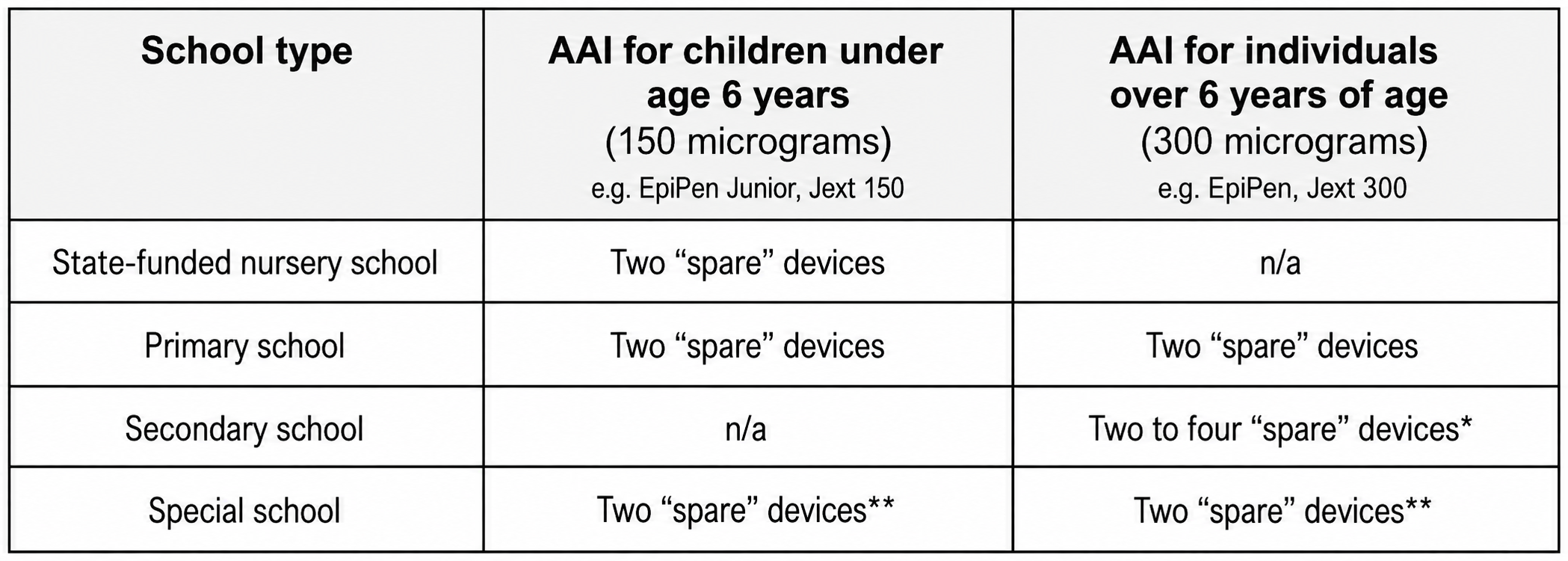
Schools should generally obtain up to 4 “spare” AAIs in appropriate dosages. They should be stored in pairs, and it may be necessary that pairs of devices are held in separate locations as needed to ensure access within 5 minutes. Where schools operate across more than one site, there should be pairs of the appropriate dosage available on each site as required.

Image Full

Our various kit options make it easy for you to configure you school’s solution to meet this guidance at an efficient cost, so you don’t overpay or overcommit.

You can even choose the brand of AAI, and easily change or adapt solutions over time. Anaphylaxis UK state "Both EpiPen and Jext are equally effective and follow the same clinical guidelines, so neither is considered better for schools”.

Spare/Emergency AAIs Should:

  • Be stored in pairs for each dose

  • Be within 5 minutes access time per site

  • If holding 4 devices, they could be stored in 2 pairs of each dose

  • Be properly signposted and marked - e.g. ‘Emergency Anaphylaxis Kit’

  • Be regularly inspected and have expiry dates of devices logged

  •  Be accessible, not locked away, and not mixed with prescribed/personal devices

Allergy Care Doesn't Stop at Anaphylaxis

Benedict’s Law highlights the importance of a comprehensive approach to allergy management, with schools expected to consider both anaphylaxis and allergic asthma within their emergency response procedures. While anaphylaxis remains a key focus, allergic asthma is another potential reaction that may require urgent treatment, particularly among children with severe allergies.

DfH state "Schools might like to keep the emergency kit together with an "emergency asthma inhaler kit" (containing an inhaler device and spacer.) Many food-allergic children also have asthma, and asthma is a common symptom during food-induced anaphylaxis."

The latest statutory guidance from DfE states “It is recommended that schools keep emergency asthma reliever inhalers alongside “spare” adrenaline devices.”

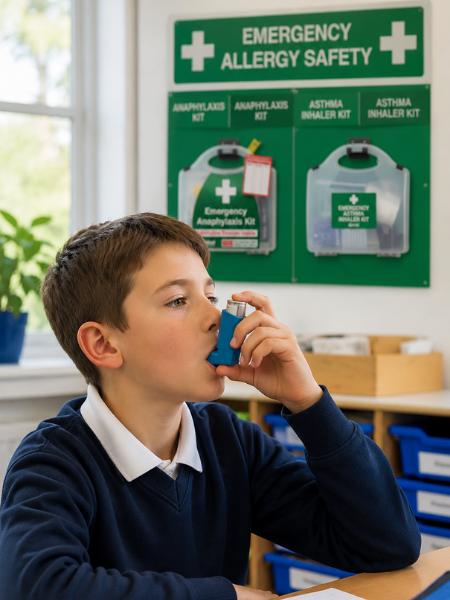
Support a complete emergency allergy response with our range of anaphylaxis kits and companion inhaler kits, designed to be stored together where required and ideal for installing near areas where food is consumed. Alternatively, choose the combined Anaphylaxis and Inhaler Station for a convenient, clearly identified solution that brings both provisions together and offers a saving compared with buying the points individually.

Image Full

Important information about allergic reactions

However effective a measures to reduce exposure to allergens may be, a risk remains that an individual will suffer an allergic reaction. It is therefore essential that the allergy safety policy provides robust and effective measures for emergency response.  
Allergic reactions occur when a susceptible person is exposed to something (an “allergen”) they are allergic to. Most allergic reactions do not affect the Airway/Breathing/ Circulation (“ABC”) and can be treated with an oral antihistamine. 
Allergic reactions are unpredictable. Most reactions do not result in anaphylaxis. However, when anaphylaxis occurs, reactions usually start off as less severe (e.g. skin rash, vomiting) but then become anaphylaxis – so someone having a reaction should always be monitored (e.g. in a first aid room) for at least 60 minutes afterwards, just in case the reaction gets worse. In other people, anaphylaxis develops within minutes after exposure to the allergen.

Features of an allergic reaction and anaphylaxis:

Mild-moderate reaction (not anaphylaxis) 

  • Swollen lips, face or eyes 
  • Itchy or tingling mouth 
  • Mild throat tightness 
  • Hives or itchy skin rash  
  • Abdominal pain or vomiting 
  • Sudden change in behaviour

Signs of anaphylaxis (think ‘A B C’)

A: Airways: Swelling in the throat, tongue or upper airways (tightening in the throat, hoarse voice, difficulty swallowing)

B: Breathing: Sudden onset wheezing, breathing difficulty, noisy breathing 

C: Circulation: Dizziness, feeling faint, sudden sleepiness, tiredness, confusion, pale clammy skin, loss of consciousness

Anaphylaxis is a severe and life-threatening allergic reaction - it can be fatal if treatment is not given quickly.

Mild reactions can worsen and become anaphylaxis. Always stay with someone having an allergic reaction for at least one hour. If in doubt, always treat for anaphylaxis. Treatment of anaphylaxis is with a dose of adrenaline.

Once started, anaphylaxis reactions progress quickly. Investigations into fatal anaphylaxis show that there is a very short window of opportunity during which steps can be taken to prevent death – therefore giving emergency adrenaline immediately and calling Emergency Services (999) is so important. Anaphylaxis always requires an emergency response. Anaphylaxis can occur without any other signs (such as a skin rash) being present. Always consider anaphylaxis in someone with a known food allergy who has sudden difficulty in breathing.

Image Full

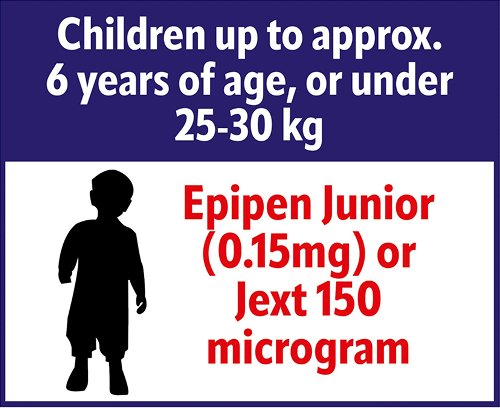
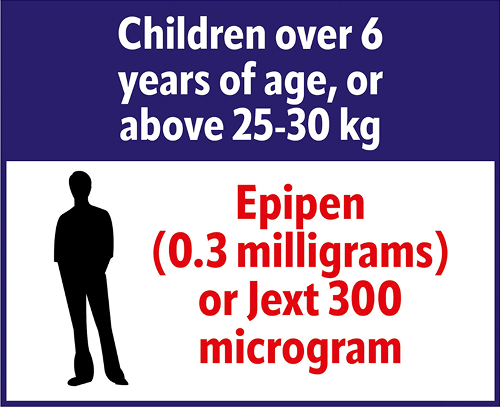
Adrenaline devices are available in different dosages depending on body weight/age. AAls are highly intuitive and easy to use devices used for the emergency treatment of anaphylaxis.

Image Full
Image Full
Eureka Anaphylaxis Kits feature clearly marked slots for 150mcg and 300mcg dosages to exactly match this categorisation and allow for correct storage of both junior and adult devices in one kit. Kits are also available with 4 slots for the same dosage for a flexible solution to meet your school's requirements exactly, according to the guidance.
Ensure that devices are stored in the correct slot that match their dosage when adding devices and performing regular maintenance inspections.

"In the context of supplying schools with AAIs for use in an emergency setting, using these same age-based criteria avoids the need for multiple devices/ doses, thus reducing the potential for confusion in an emergency. Schools should consider the ages of their pupils at risk of anaphylaxis, when deciding which doses to obtain as the spare AAI."

– Department of Health: Guidance on the use of adrenaline auto-injectors in schools

Asthma is an additional reaction which may require treatment with a personal or emergency inhaler as a result of an allergic reaction, and is common among those with known severe allergies. Tragically, over a recent 4 year period, the National Child Mortality Database Report on Asthma and Anaphylaxis notes that all of the children who sadly died from anaphylaxis and had known allergies, were also diagnosed with asthma.


Anaphylaxis and Allergy Awareness Training

Staff allergy awareness training is now required under Benedict’s Law. Schools should ensure regular (at least annual) whole-school allergy awareness training, so that staff understand how to recognise allergic reactions and follow emergency response procedures.

Training should cover not just teachers, but all staff who may be present while pupils are on site, including temporary staff, volunteers, caretakers, catering staff and others who may supervise pupils outside of the classroom.

We’ve partnered with a market-leading provider of fully accredited and CPD certified training to offer Eureka Allergy Awareness for Schools Level 3 (VTQ), a course specifically designed to help schools meet the latest allergy guidance under Benedict’s Law. Available online for under £10 per user, so you have the flexibility to train staff whenever needed, at an affordable cost.

The course covers allergy management, allergen control and statutory guidance, alongside individual healthcare plans and the recognition and treatment of anaphylaxis. It also includes guidance on the safe use of adrenaline auto-injectors (AAIs), helping staff understand how to respond effectively in an emergency.  

The course material and resulting qualifications are endorsed by TQUK, and fully meet the latest UK and European Resuscitation Council Guidelines, including the guidelines for Anaphylaxis. 

Providing Emergency Allergy Provisions On Day Trips

Without proper policies and safeguards, allergies exclude some students from taking part in school activities. The latest guidance changes this.

Image Full

Arrangements must now be clear and unambiguous about the need for proactive support so that children and young people with medical conditions can participate in school trips and visits, or in sporting and extracurricular activities, and not prevent them from doing so.

Schools, colleges and early years settings should consider what arrangements they need to make to enable children with medical conditions to participate fully and safely on trips and visits.

A risk assessment should be carried out so that planning arrangements take account of any reasonable adjustments needed to ensure that children and young people with medical conditions are included, including allergies. 

Such plans should include how individuals at risk of anaphylaxis will have access to their prescribed adrenaline devices, alongside any “spare” adrenaline devices; and how children and young people with allergies will be able to participate safely in visits, trips and extra-curricular activities

Our range of anaphylaxis kit soft pouches and insulated pouches are a simple and cost-effective solution for ensuring that prescribed or emergency/spare devices can be readily available on school visits/trips, or activities away from the main school building, and clearly identifiable at all times as part of such arrangements.

Image Full

Why Buy School EpiPens & Anaphylaxis Kits From Eureka?

Image Full

Order exactly what your school needs, when you need it, along with other essential school supplies. Don’t overpay for devices your school may not need, or overcommit when guidance, laws and solutions are expected to evolve

Image Full

Products expressly designed to help meet Benedict’s Law at an affordable cost. Include provisions to manage allergic asthma, not just anaphylaxis – as required under the latest statutory allergy guidance

Image Full

Choose from leading brands to suit your school’s requirements for anaphylaxis and allergic asthma

Image Full

Instant credit for all UK Schools

Image Full

Free gift with all orders over £150

Image Full

Innovative and sustainable temperature controlled packaging enables fast, secure delivery

Image Full

Rated 'Excellent' on Trustpilot from thousands of reviews - 95% of our reviews are 4 stars or better

Image Full

Supplier to over 15,000 UK Schools - with 26 years’ experience

Reviews

Don’t just take our word for it – here are just some of things our customers say after buying from us:

Image Full

Thank you for making the ordering process as simple as possible

Great prices, fast delivery, pleasure to do business with

Exceptional Service – Highly Recommend to Schools