





- Notice regarding AAIs and Inhalers to Schools:

Due to high demand as schools comply with Benedict’s Law, new AAI and inhaler orders may be subject to a 7–10 working day lead time. Please ensure Headteacher Authorisation Forms are completed in full and accurately. Half-term school closures may also impact despatch and delivery dates. Thank you for your patience and understanding.

Home Safety Signage, Books & Labels Safety Signage Food Safety and Allergy Signs

Food Safety and Allergy Signs

Up to 80% of anaphylaxis cases in children are caused by food. Poor food separation processes, plus a lack of allergen labelling and allergy awareness has sadly proven fatal in schools.

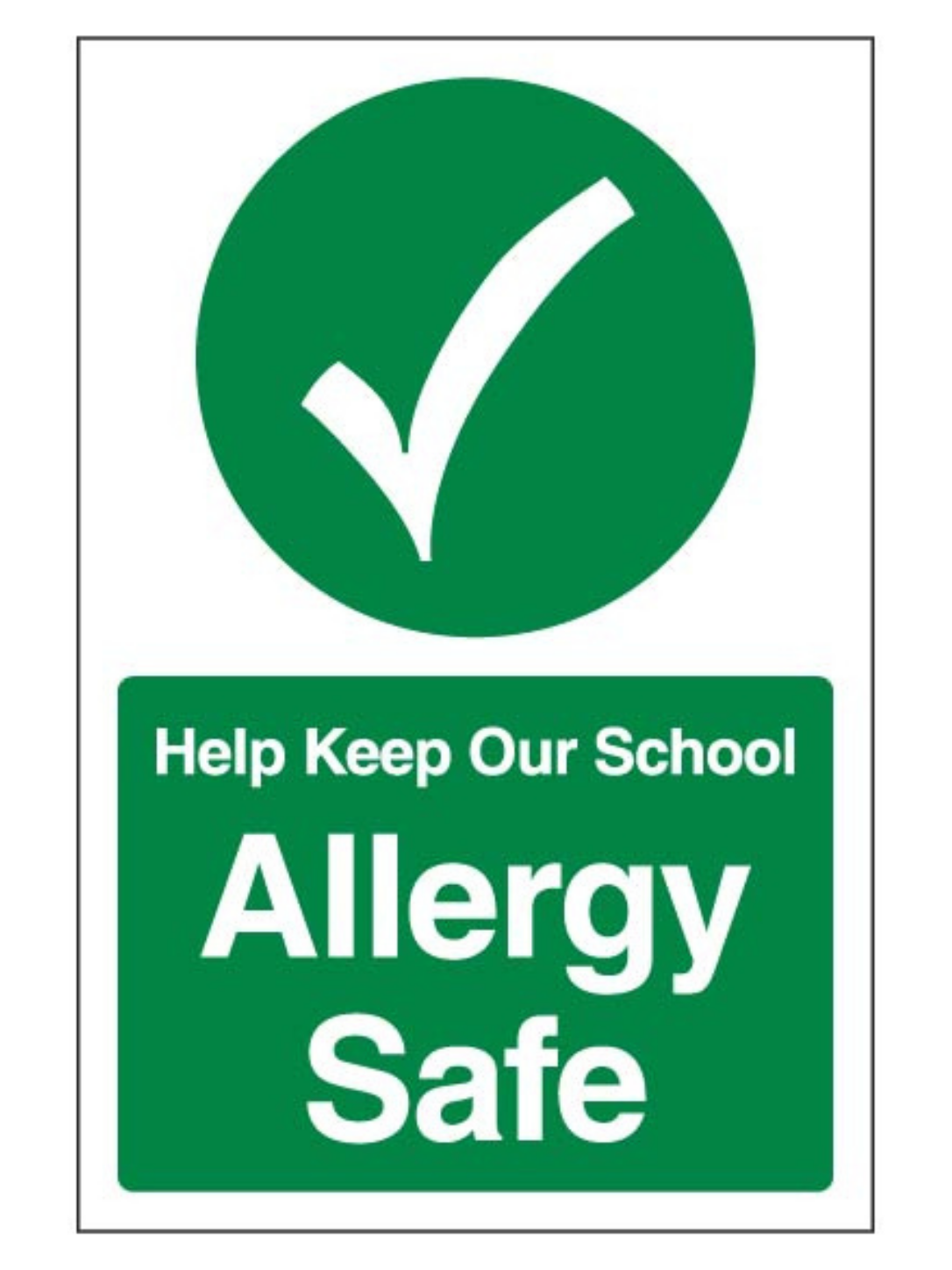
Schools in England are now expected to strengthen their approach to allergy awareness and management as part of the Department for Education's new statutory allergy guidance linked to the introduction of Benedict's Law. Schools should have clear procedures for identifying and managing allergens, reducing the risk of cross-contamination, providing accurate food information where appropriate, and raising allergy awareness among staff and pupils. Clear signs, labels and posters play an important role in supporting these procedures to reduce allergy emergencies, helping to create a safer environment wherever food is prepared, served or consumed. They are affordable, simple to implement, and effective at improving allergy safety and awareness in schools.

Help Make Your School Safer for Pupils with Food Allergies

Food allergens can present a serious risk in schools, particularly wherever food is stored, prepared, served or consumed. Effective allergen management relies on clear procedures, good communication and strong awareness among staff and pupils.

  • Schools in England are expected to strengthen their approach to allergy awareness and management as part of the Department for Education's new statutory allergy guidance linked to the introduction of Benedict's Law. This includes having clear procedures for identifying and managing allergens, reducing the risk of cross-contamination, providing accurate food information where appropriate, and raising allergy awareness.
  • Clear signs, labels, posters and record-keeping tools provide a simple and affordable way to support these procedures. Used alongside staff training, supervision and a wider allergy safety policy, they can help make good allergen management part of everyday school life.

WHY ALLERGEN SAFETY MATTERS IN SCHOOLS

Image

Food-induced allergic reactions can be extremely serious. In busy school kitchens, dining halls, classrooms and food technology areas, mistakes such as poor ingredient identification, shared utensils or inadequate separation can increase the risk of allergen cross-contact.

Effective allergen management helps schools create consistent processes for identifying allergens and communicating important information. Visual prompts and simple record-keeping tools can reinforce those processes at the point where they matter most.

·       Improve allergen awareness among staff and pupils

·       Help reduce the risk of allergen cross-contact

·       Reinforce staff training and agreed procedures

·       Keep important allergen information visible

·       Encourage more consistent food preparation and handling practices

·       Support a wider whole-school approach to allergy safety

SIMPLE CHANGES THAT CAN MAKE A BIG DIFFERENCE

Improving allergen management does not always require complicated or expensive changes. Clear signs, labels, posters and recipe records are straightforward tools that can help turn procedures into visible everyday actions.

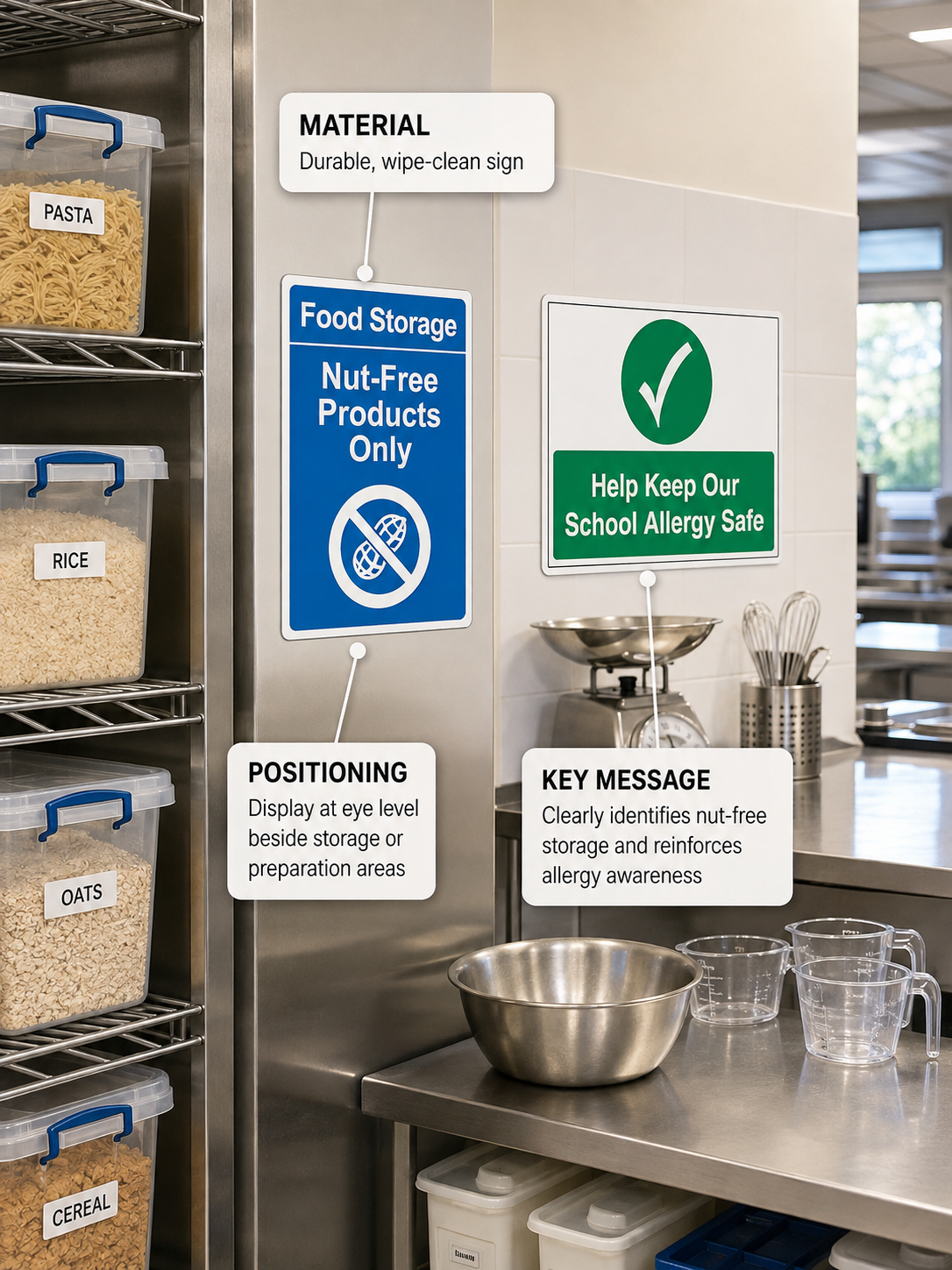
Placed where food is received, stored, prepared and served, they provide timely reminders and make key information easier to identify, helping staff follow agreed processes more consistently.

Image FullImage Full

Shop Allergen Safety Solutions

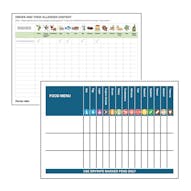
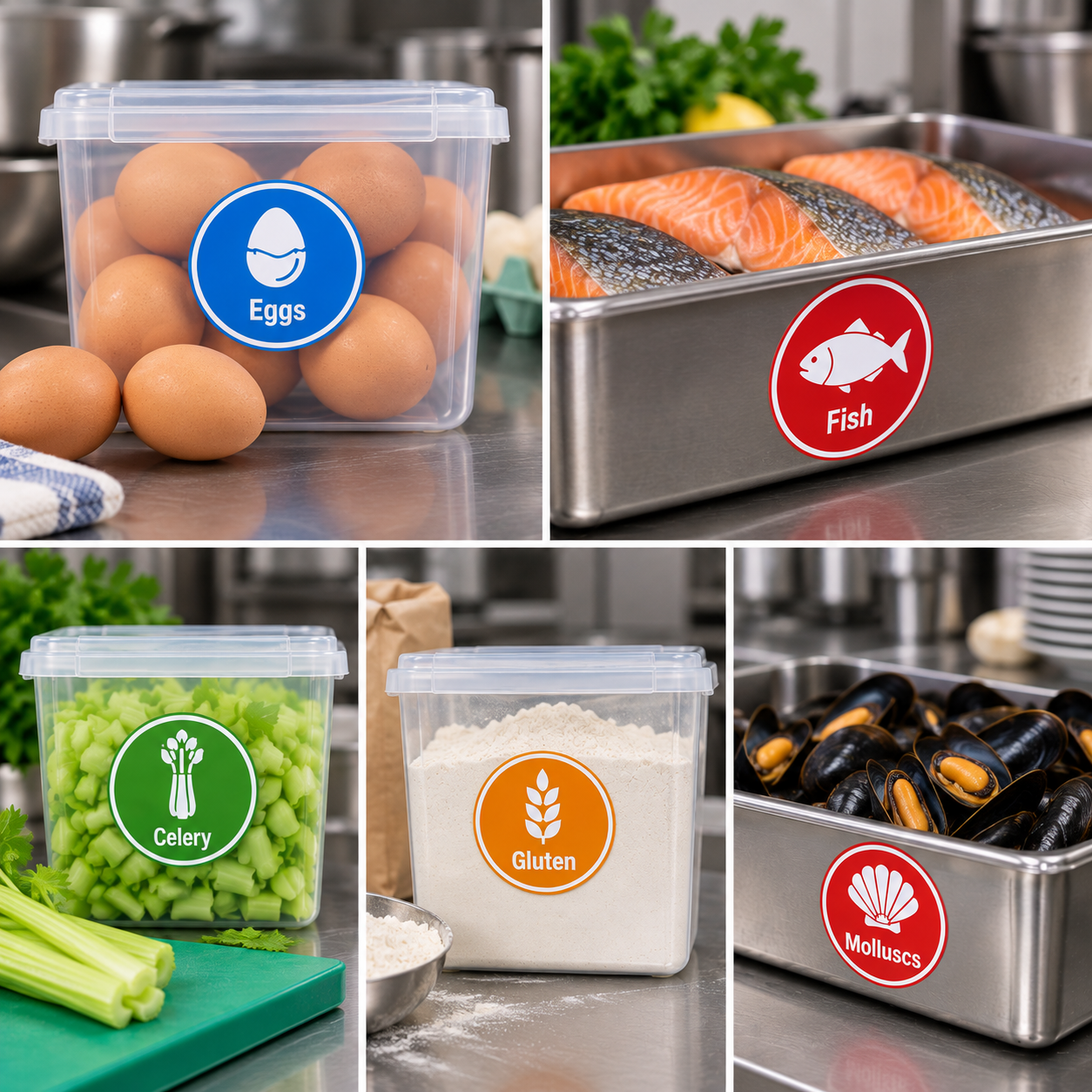
Support safer, more consistent allergen management throughout your school with practical products designed to keep important information visible and procedures easy to follow. Use Allergen Safety Labels to clearly identify ingredients, equipment, storage and designated preparation areas, while Allergy & Food Safety Signs provide clear visual reminders of important allergen, hygiene and food preparation procedures at the point of use.

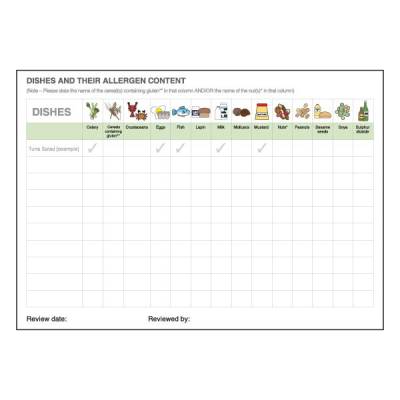
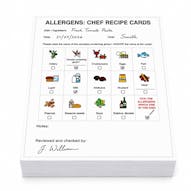
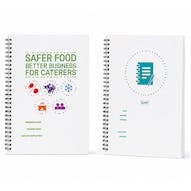
Keep essential guidance easy to reference with Allergen & Food Safety Posters, or use Write-On Allergen Safety Posters to display information specific to your school or kitchen that can be updated when required. For day-to-day record keeping, Chef Recipe Cards provide a consistent way to document ingredients and allergens for individual dishes, while Safer Food Better Business resources support a more structured approach to managing and recording food safety procedures.

Image
Image

HOW OUR ALLERGEN SAFETY PRODUCTS HELP

The range is designed to support different stages of allergen management rather than relying on a single solution.

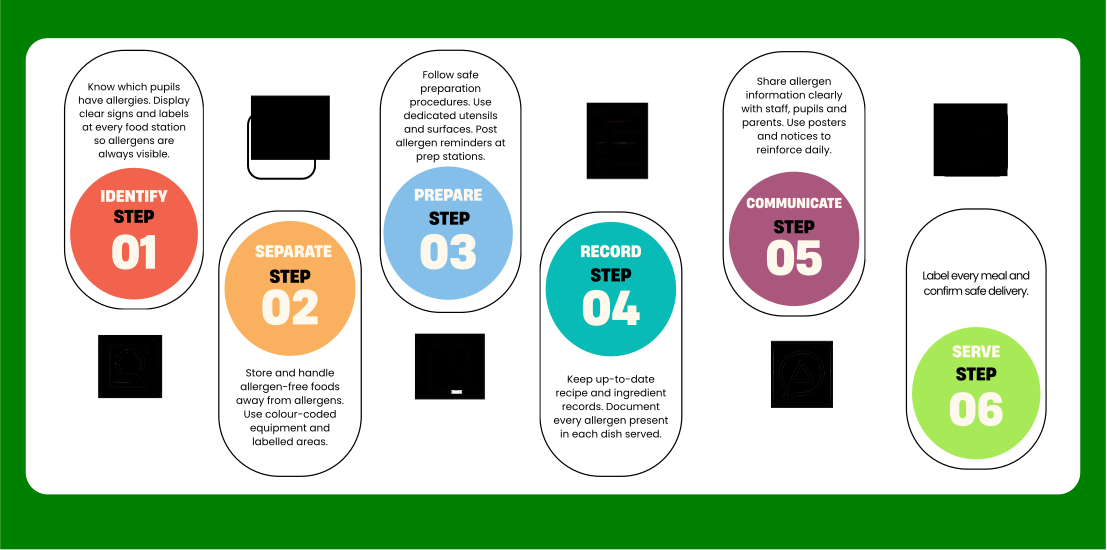
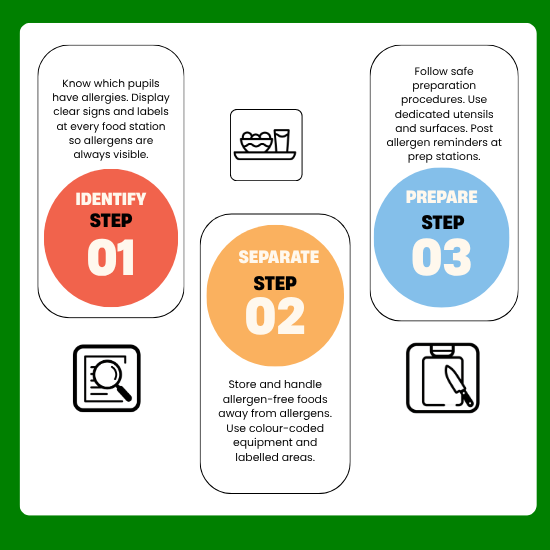
1. Identify - Use labels, posters and recipe records to make allergen information easier to identify.

2. Separate - Clearly mark designated storage, utensils and preparation areas to support separation procedures.

3. Prepare - Position signs and visual guidance where staff prepare food to reinforce agreed working practices.

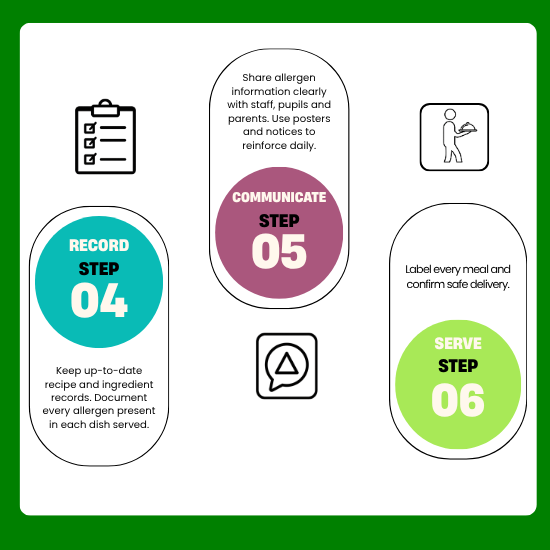
4. Record - Use recipe cards and food safety records to document ingredients, allergens and key checks.

5. Communicate - Keep important information visible so staff can quickly reference procedures and allergen details.

6. Serve - Support consistent processes from preparation through to service as part of the school's wider allergen management approach.

Know the 14 Allergens

Clear identification of the 14 regulated allergens is an important part of effective allergen management. Posters, labels and signs can help keep this information visible wherever food is stored, prepared and served.

Image Full

Molluscs

Image Full

Crustaceans

Image Full

Lupin

Image Full

Celery

Image Full

Egg

Image Full

Mustard

Image Full

Peanut

Image Full

Sulphur Dioxide

Image Full

Sesame

Image Full

Treenuts

Image Full

Molluscs

Image Full

Fish

Image Full

Soybean

Image Full

Milk

SUPPORTING SCHOOL ALLERGEN MANAGEMENT

Image

Practical Tools to Support a Wider Allergy Safety Policy

Signs, labels, posters and food safety records should not be presented as a replacement for training, supervision or documented procedures. Their value is in helping schools put those procedures into everyday practice by keeping information and reminders visible at the point of use.

The Department for Education's school allergy guidance provides the wider context for strengthening allergy awareness and management in schools. Food Standards Agency guidance and resources also provide an important basis for good allergen and food safety practices.

Natasha's Law provides additional context around accurate allergen information for foods that are Prepacked for Direct Sale (PPDS). Where applicable, PPDS foods must carry the name of the food and a full ingredients list with regulated allergens emphasised.

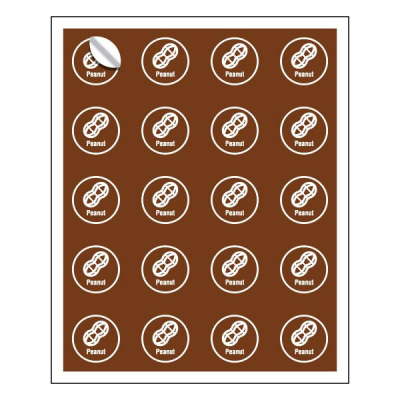
Allergen Safety Labels

Make allergen information easier to identify

Clear labels can help staff distinguish designated ingredients, equipment, storage areas and preparation zones quickly, supporting more consistent allergen management.

  • Supports clear identification at the point of use
  • Helps reinforce separation procedures
  • Simple to introduce into existing kitchen processes
  • Useful across storage, preparation and service areas

ALLERGY & FOOD SAFETY SIGNS

Keep important procedures visible

Signs provide a constant visual reminder of agreed food safety and allergen procedures, helping reinforce staff training long after induction or refresher sessions have finished.

·       Position guidance exactly where it is needed

·       Reinforces food preparation and hygiene procedures

·       Helps create more consistent working practices

·       Suitable for kitchens, food technology rooms, serving areas and stores
 

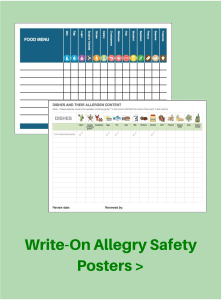
WRITE-ON ALLERGEN SAFETY POSTERS

Make allergen information specific to your school

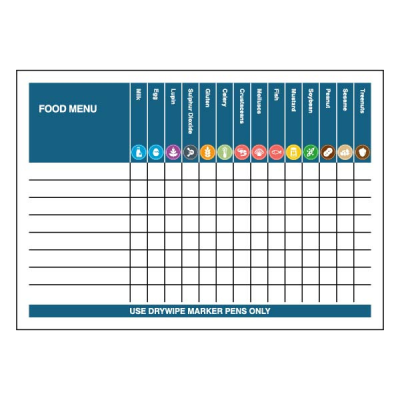
Write-on formats allow schools to display information that relates directly to their own kitchen, food preparation process or allergen controls and update it when required.

·       Customisable information at the point of use

·       Easy to update as procedures or information change

·       Keeps school-specific instructions clearly visible

·       Supports consistent communication between staff

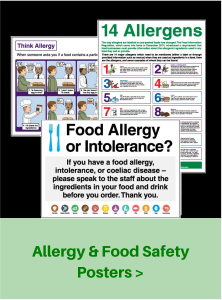
ALLERGEN & FOOD SAFETY POSTERS

Put essential guidance where staff can see it


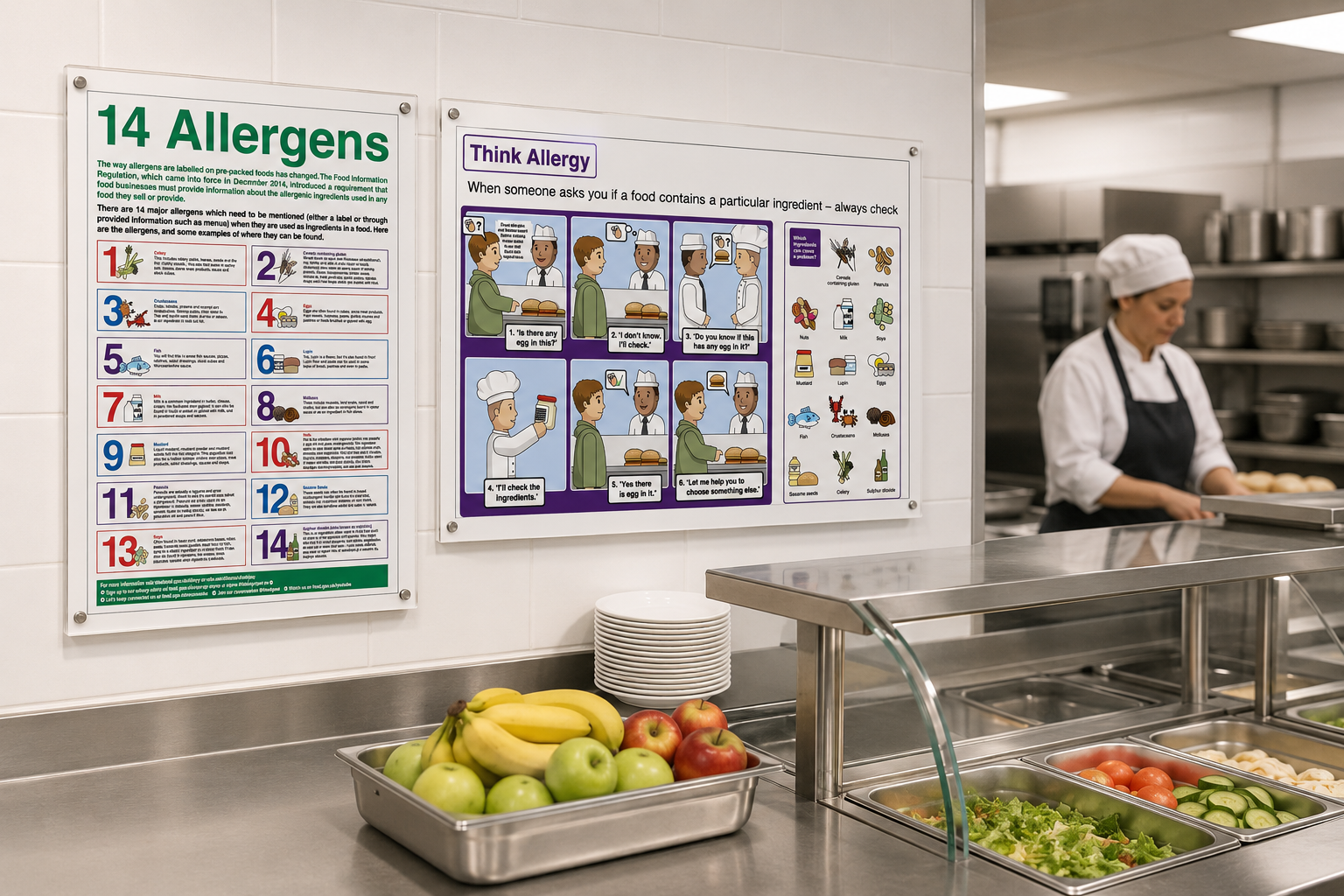
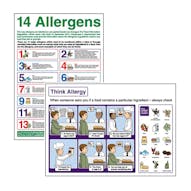
Information posters make key allergen, hygiene and food preparation guidance quick to reference, supporting awareness without staff needing to search for information during a busy service.


·       Provides quick-reference visual guidance

·       Supports staff awareness and training

·       Ideal for preparation areas, kitchens and staff spaces

·       Helps keep key allergen information front of mind

Image Full

CHEF RECIPE CARDS

Image

Create a clearer record of ingredients and allergens

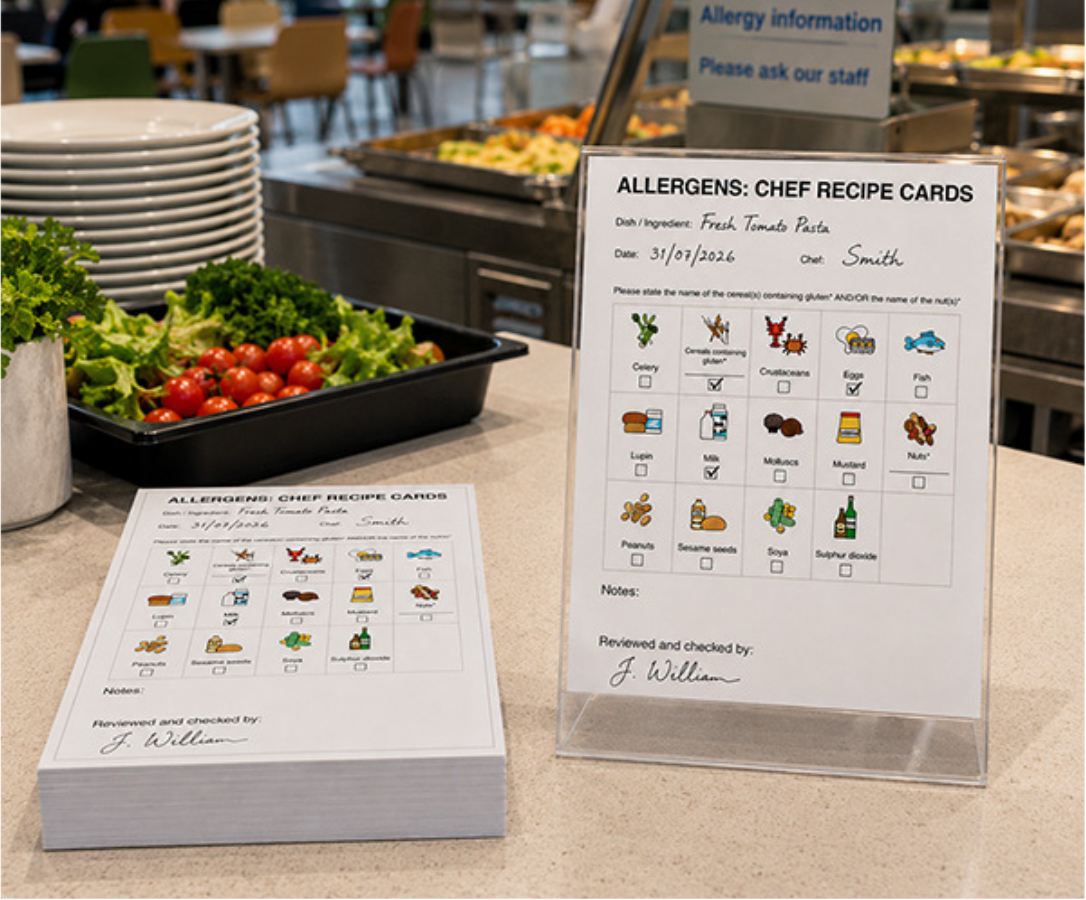
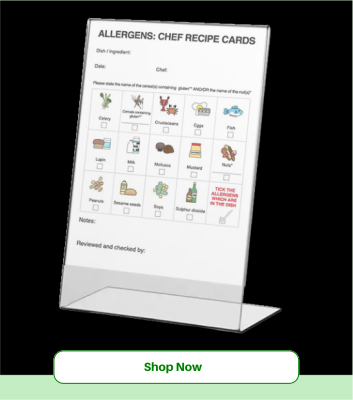
Recipe cards give kitchen teams a consistent place to record dish ingredients and allergen information, helping improve communication and reduce reliance on memory.

·       Records recipe and allergen information together

·       Supports consistency between kitchen staff

·       Useful when dishes or ingredients change

·       Can be displayed in holders for easy reference during preparation

SAFER FOOD BETTER BUSINESS

Support structured food safety management

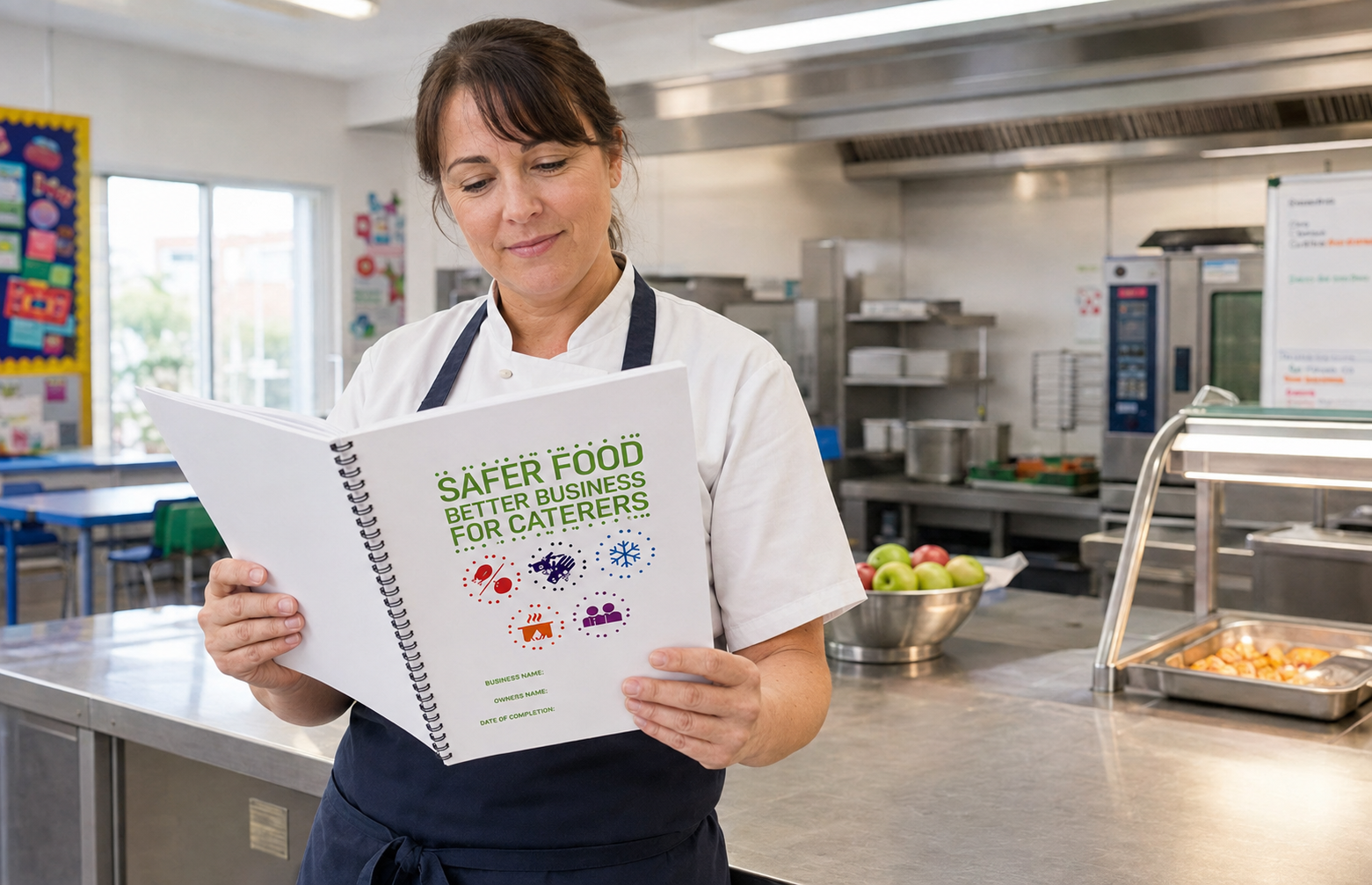
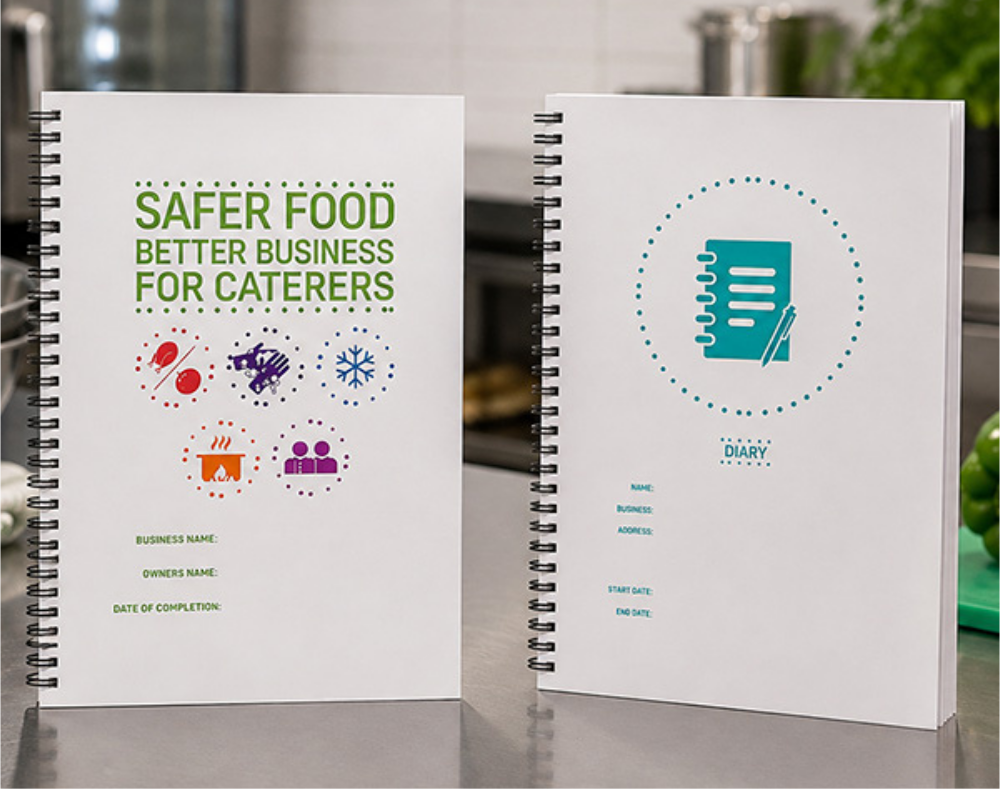
Safer Food Better Business resources help food operators manage food safety through practical procedures, checks and record keeping, providing a useful framework for school catering environments.

·       Supports structured food safety procedures

·       Encourages consistent checks and record keeping

·       Practical format for everyday kitchen use

·       Based on Food Standards Agency resources

Image Full

FAQs

  • Why is allergen management important in schools?

    Schools may cater for pupils with food allergies, so clear procedures for identifying allergens, preventing cross-contact and communicating food information form an important part of a wider allergy safety approach.

  • How can signs and posters help?
  • Are allergen signs required by the new school allergy guidance?
  • Where should allergen safety products be used?
  • What is the difference between allergy safety and allergen safety?
  • What are the 14 regulated allergens?